The Threat Landscape Has Fundamentally Changed
In 2026, cybercriminals are no longer sending clumsy emails riddled with spelling errors. They are deploying artificial intelligence to craft hyper-personalised phishing messages indistinguishable from genuine communications, generate real-time deepfake video calls impersonating executives, and clone voices with startling accuracy. According to the 2026 Cloudflare Threat Report, AI has become a force multiplier for attackers, dramatically lowering the effort required to launch sophisticated campaigns while simultaneously making those campaigns far more effective.
The numbers are stark. Phishing losses skyrocketed 200% year-over-year by early 2026. A single phishing incident in January 2026 resulted in a $12.25 million loss. Meanwhile, IBM's X-Force Threat Intelligence Index 2026 recorded a 44% year-over-year increase in the exploitation of public-facing applications. The era of easily spotted scams is over.

AI-generated phishing emails in 2026 are grammatically perfect and contextually aware, making them nearly impossible to detect without technical tools.
How Deepfake Attacks Actually Work
The mechanics of a modern deepfake attack are more accessible than most organisations realise. Using publicly available footage from LinkedIn profiles, company websites, and social media, attackers can generate convincing video and voice replicas of senior executives in a matter of hours. These synthetic identities are then used in live video calls to authorise fraudulent wire transfers, grant access to sensitive systems, or manipulate employees into bypassing security protocols.
According to research published in 2026, 63% of cybersecurity leaders now cite AI-generated deepfakes as a rising threat to digital trust. Deepfake-as-a-Service platforms that emerged in 2025 have industrialised the process, allowing even low-skilled criminals to deploy convincing impersonation attacks at scale. AI-powered deepfakes were reportedly involved in over 30% of high-impact corporate impersonation attacks in 2025 alone, a figure expected to climb significantly through 2026.

Deepfake technology enables criminals to generate synthetic identities from minimal source footage, enabling real-time impersonation of executives and colleagues.
Why Traditional Defences Are Failing
Legacy security awareness training was built around one central premise: teach employees to spot obvious red flags — misspelled domains, generic salutations, unusual sender addresses. In 2026, none of these signals reliably exist in AI-generated attacks. Large language models craft phishing emails that mirror the writing style, tone, and vocabulary of the person being impersonated, referencing real projects, genuine relationships, and accurate business context scraped from public sources.
The World Economic Forum's Global Cybersecurity Outlook 2026 found that 94% of survey respondents identified AI as the most significant driver of change in cybersecurity this year. Yet despite this awareness, many security incidents continue to stem from what IBM describes as lapses in basic cybersecurity hygiene — environments too complex for manual oversight and identity sprawl that amplifies the impact of simple mistakes.
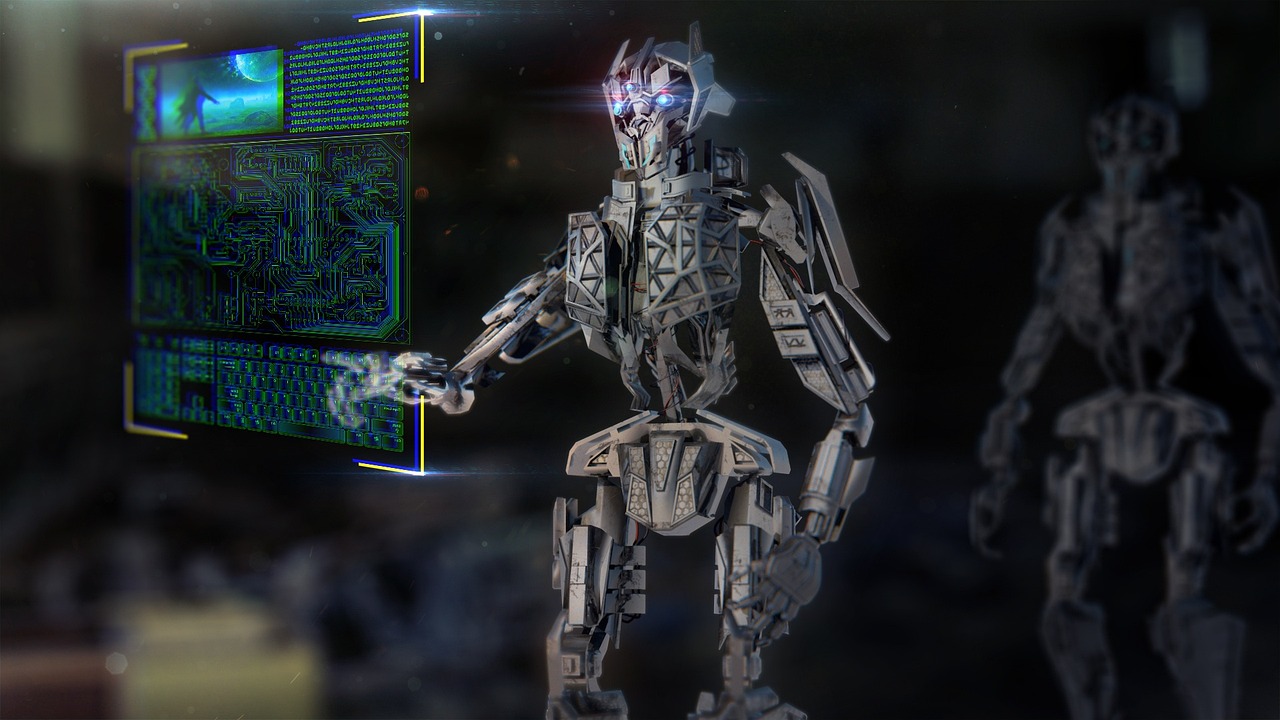
Organisations are deploying AI-powered detection systems to counter AI-driven attacks, creating a rapidly accelerating arms race in cybersecurity.
How Organisations Are Responding
Effective defence in 2026 requires a fundamental rethink rather than incremental patching. Gartner's top cybersecurity trends identify three priority areas: securing new frontiers created by AI agents, transforming governance, and normalising AI adoption within security operations centres. In practical terms, this means extending Identity and Access Management to cover non-human machine actors, automating credential life cycles, and building cryptographic agility — the ability to switch encryption methods rapidly as vulnerabilities emerge.
Zero Trust architecture has moved from optional best practice to regulatory expectation. The principle is unambiguous: no user, device, or system is trusted by default, even from inside the corporate perimeter. Every access request must be continuously verified. When combined with phishing-resistant multi-factor authentication, DMARC email controls, and AI-powered behavioural analytics, Zero Trust significantly reduces the attack surface that deepfake and phishing campaigns exploit.
Zero Trust architecture has become a regulatory expectation in 2026, replacing perimeter-based security models with continuous verification at every access point.
What Individuals and Teams Can Do Now
The human layer remains both the most vulnerable and the most improvable element of any security posture. Security awareness training must now include deepfake simulation exercises, voice cloning recognition drills, and clear escalation protocols for any unusual request involving financial transactions or access changes — regardless of how legitimate the requestor appears. The rule is simple: if a request is unusual, verify it through a separate, pre-established channel before acting.
The cybersecurity arms race of 2026 is unlike anything the industry has faced before. Attackers have gained access to the same AI capabilities that defenders are only beginning to deploy. The organisations that adapt fastest — embedding AI into their detection systems while rebuilding their human culture of verification — will be the ones that survive the next wave. For everyone else, the front door may already be open.